understanding
of the genetic basis for
human diseases
What can we help you with

Testimonials
“We closely collaborate with the CCP for over four years and we have had only the best experience. Together we generated multiple mouse models of inducible and tissue-specific mitochondrial deficiency, which took our research to a whole new level. Everyone at the CCP has always been very helpful whenever we needed advice or practical help. We are happy to have the opportunity to work together and we plan new challenging projects for the future.”
Jakub Rohlena
Institute of Biotechnology of the Czech Academy of Sciences
“My group has been collaborating with and using services of the Czech Centre for Phenogenomics (CCP) since it was established. Thanks to CCP’s excellent expertise and adoption of the newest technologies, we were able to obtain many mouse models using TALEN and, later, CRISPR technologies. I also highly value CCP’s assistance with phenotype analysis, particularly with complex novel phenotypes where their expertise and advice helped us a lot to understand biological roles of studied genes.”
Petr Svoboda
Institute of Molecular Genetics of the Czech Academy of Sciences, Prague
“After several unsuccessful gene targeting in mouse embryonic stem cells, using traditional methods and also CRISPR/Cas9, we approached CCP Transgenic Unit to help us to create a mouse model with single nucleotide exchange in the gene of our interest. They created the strategy, optimized conditions, injected mice and in four months we received first chimeras and in few weeks got germ line transmission. For very reasonable price. Perfect!”
Lucie Lanikova
Palacky University Olomouc
“Cooperation with the CCP workplace is a very pleasant experience for us. The whole process is professional at every step and is carried out with the utmost care and attention. Their work maintains a consistently high quality. The prepared tissue FFPE and cryo blocks demonstrate high technical skill and precision and every step of the process is controlled with regard to the optimal result and our needs. I appreciate that all our cooperation is conducted in a very friendly spirit. The CCP team is always available, willing to answer our questions, or respond very quickly and flexibly to changes in our requirements. Overall, we are extremely satisfied with the service and are happy to recommend CCP to anyone looking for professional and reliable processing of their tissue samples for their research activities.”
Šárka Vošahlíková
Scientific team of Sotio Biotech, a.s.
“We established a collaboration with the CCP for a knock-out mouse model. They are highly professional and cooperative and offer a wide range of detailed analyses that have enriched the quality of our project. In our case, the gene they deleted is a noncoding RNA (ncRNA), and although the functionality of this class of genes is poorly characterized and their phenotypic analyses can lead to non-canonical outputs, they immediately join this challenging project with dedication and carefulness. We also had the opportunity to visit the institute, and we were positively impressed to see such a fully equipped facility. Highly recommended!”
Monica Ballarino
Sapienza University of Rome
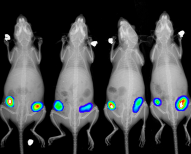
“Over the past five years, my lab has worked with the CCP on several projects, including in vivo drug testing, phenotype analyses and the development of new transgenic mouse models. I am always impressed by the scientific and organizational level that we find at the CCP. The presence of such a center in Czechia gives my research an edge that we used to find only at the best US universities. Well done CCP!”
Pavel Krejci
Masaryk University and Institute of Animal Physiology and Genetics CAS, Brno
“My research group has been in close contact with CCP for more than 5 years. Their excellent assistance with the mouse models has been essential for several high profile studies we have published in the last two years. Currently, we are analyzing together novel mouse knockout strains with the exciting phenotype. I very much appreciate CCP expertise in the phenotyping of both embryonic as well as adult mice. We would not be able to get that far without their help.”
Vitezslav Bryja
Masaryk University, Brno
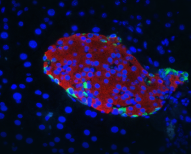
“Great collaboration and perfect service! The team demonstrated exceptional skill in providing us with a comprehensive histological analysis of mouse adrenals in the first model of autoimmune Addison’s disease. It is not easy to capture a professional snapshot of an inflamed adrenal gland, but the team was able to describe the pathological changes in the cortex of the adrenals using a combination of HE staining, Oil red staining, and F4/80 histochemistry. I would also recommend slide scanner analyses as they saved us a lot of time. Overall, I highly recommend this team for their expertise and excellent service.”
Aleš Neuwirth
Group of Adaptive Immunity, Institute of Molecular Genetics
“I evaluate the quality of services provided by the CCP Department of Histopathology and Biochemistry & Hematology extremely positively. The team headed by Dr. Juraj Lábaj always met our current requirements. Communication was clear and helpful from the first moment. Every member of Dr. Labaj’s team was, in case of request, always willing to provide useful professional advice.”
Filip Jura
First Faculty of Medicine, Charles University
“I was most impressed by the professionalism, cooperativeness, efficacy and technical competence of the CCP staff. Thanks to their expertise and cutting-edge technologies for constructing knock-out and transgenic mice, their skill in phenotyping technologies and scientific insight, our collaborations at CCP enabled us to move our projects a new level of scientific relevance. It is a real pleasure to have such a supportive and invaluable expert partner involved in your work.”
Peter Sebo
Institute of Microbiology of the Czech Academy of Sciences, Prague
“The CCP Group is very professional, reliable and pleasant. We have worked together in the field of microCT imaging for mouse embryos and can only recommend this platform. Everything was to our complete satisfaction and what’s more, we gained a lot from this collaboration and optimized our work as a result.”
Nadine Spielmann
German Mouse Clinic, Institute of Experimental Genetics, Helmholtz, Munich
“I am most deeply impressed by the professionality of the CCP. Specifically, the interaction with your colleagues, who analyze our ARHGAP11B-transgenic mice, has been a real pleasure. It is clear to me that your colleagues are top-notch experts. I think you should be proud of the CCP that you have built up! It certainly is a world-class center!”
Wieland B. Huttner
Max Planck Institute of Molecular Cell Biology and Genetics, Dresden
“Dear Jana,
I am so happy about that!!! It is very efficient. We should go to your facility to learn! …….”
Herman
Technion-Research and Development Foundation, Israel
From our Twitter
Latest News

The 8th CCP Phenogenomics Conference
SAVE THE DATE: the 8th CCP Phenogenomics Conference will take a place in the beautiful city of Prague from September 9-11, 2026.

A Decade of High-Impact Science
The Czech Centre for Phenogenomics is renowned for its service to the user community, its scientific footprint is perhaps best measured by the calibre of publications its team has co-authored. CCP researchers have consistently published in the world’s most prestigious journals, including Nature, Cell, and Nature Genetics.

From Vision to Excellence
This year, the Czech Centre for Phenogenomics celebrates ten years as a national and European hub for advanced disease modelling and phenotyping. Founded from a small transgenic unit at the Institute of Molecular Genetics, CCP evolved into one of Europe’s largest and most advanced infrastructures for phenogenomics. Today, CCP employs around 140–145 specialists and operates fully as a large research infrastructure hosted by the Czech Academy of Sciences.
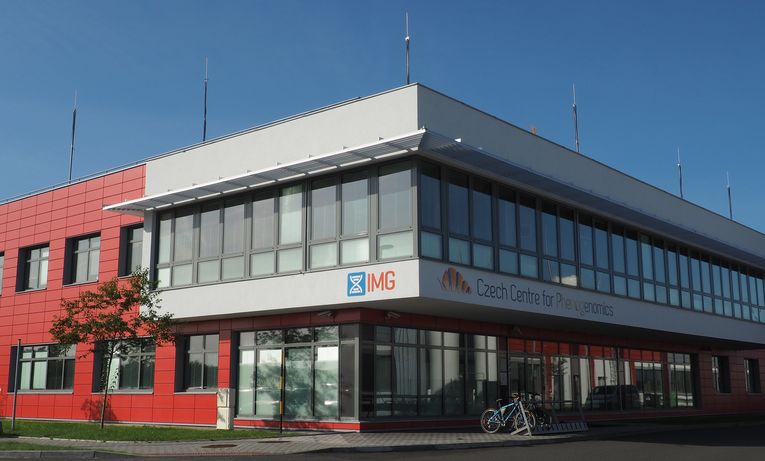
About Czech Centre for Phenogenomics
Genetically modified mouse models have become a key tool in basic and biomedical research. The ability to engineer the mouse genome has greatly transformed biomedical research in the last decade. Crucial for this technology is the ability to control the expression of genes of interest. It is possible to increase or decrease gene expression, or eliminate the expression of a gene completely.
Transgenic and gene knockout/knockin technologies have become important experimental tools for assigning functions to genes at the level of whole complexity of organism, creating models of genetic disorders, evaluating effects drugs and toxins, thus helping to answer fundamental issues in basic and applied research.