Netherton Syndrome
Genetics
Autosomal recessive disease caused by biallelic loss-of-function variants in SPINK5, encoding the serine-protease inhibitor LEKTI.
Molecular Mechanism
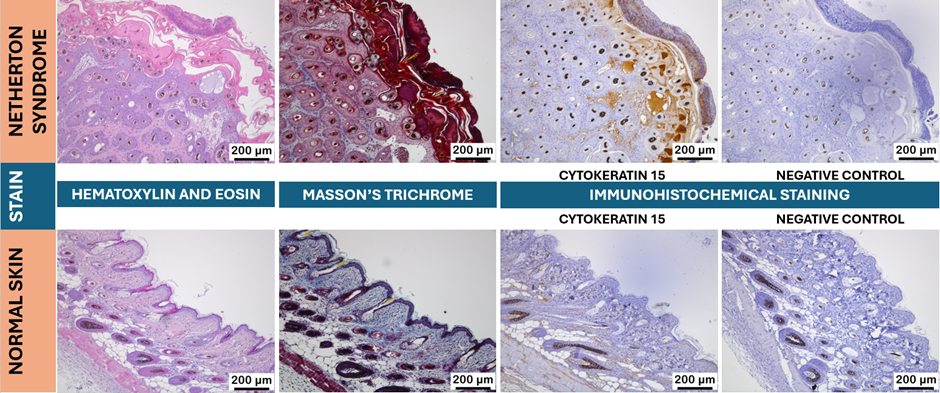
LEKTI deficiency releases epidermal kallikreins, especially KLK5, KLK7 and KLK14, from normal control. Excess proteolysis accelerates corneodesmosome degradation, activates inflammatory signaling and produces a leaky, highly inflamed epidermal barrier.
Therapy
Care combines emollients, cautious topical anti-inflammatory treatment, infection control, nutritional and allergy management. Intravenous immunoglobulin and targeted biologics can help selected patients, but evidence is limited. Protein, cell and gene-replacement approaches remain investigational.
CCP Activity
CCP develops and phenotypes SPINK5-deficient models and evaluates precise gene-delivery strategies in keratinocyte systems and in vivo. Trans-epidermal water loss, epidermal structure, inflammatory status and restoration of barrier function are used as efficacy endpoints.