Metabolomics
- Research associate:
- Laboratory technicians:
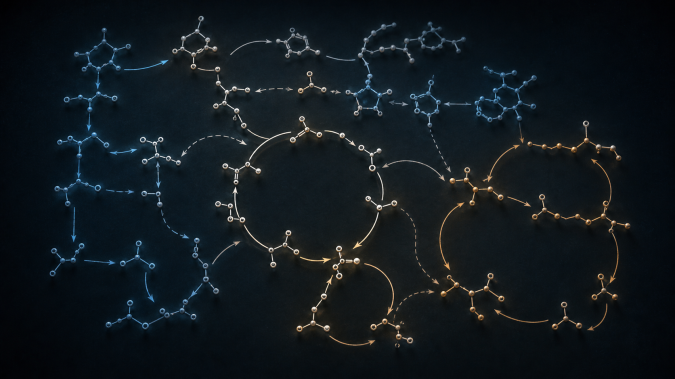
The Unit enables detailed characterization of metabolic pathways and their perturbations across biological systems, including blood, tissues, and cell-based models. A key strength lies in integration with other phenotyping platforms, allowing metabolic signatures to be interpreted in the context of tissue pathology, immune status, and systemic physiology. In addition to baseline phenotyping, the Unit supports advanced applications including pharmacokinetics, isotope tracing–based flux analysis, and spatial metabolomics. These workflows provide mechanistic insight into metabolic dysregulation and robust readouts for preclinical studies.
Standard services LC-MS–based metabolite and lipid profiling
High-resolution LC-MS analysis of metabolites, lipids, and exogenous compounds across multiple biological matrices (plasma, serum, tissues, cell pellets).
standard services Targeted metabolite analysis
We offer broad range of services focused on biological markers and its metabolites, as well as exogenous substances, from various matrices (plasma, serum, liver, brain, cell pellets and others). We focus specifically on the measurement of metabolites involved in:
- Krebs cycle
- Glycolysis / gluconeogenesis
- De novo pyrimidine synthesis
- Bile acids and steroid hormones
Standard Services Targeted Lipidomic analysis
We provide lipidomic analysis in plasma, tissues and cell line samples, particularly using flow injection analysis (FIA), by quantitative approach, in PC, PE, PG, LPC, LPE, Cer, SM, TG, DG, and CE lipid classes. In addition to concentration data, we are able to offer basic interpretation of the results and graphical visualization options. Targeted qualitative or semi-quantitative analysis of specific lipid species using separation techniques is also available.
Standard Services MALDI spatial metabolomics and lipidomics
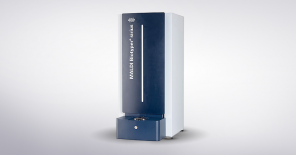
MALDI imaging provides spatially resolved analysis of metabolites and lipids directly in tissue sections, enabling simultaneous detection of multiple molecular species within their histological context. This approach allows mapping of metabolic heterogeneity across tissues and direct correlation of molecular distributions with morphological features.
The Unit supports complete MALDI workflows, including optimized sample collection, cryo-sectioning, and matrix application to ensure high data quality and preservation of spatial resolution. Advanced instrumentation enables high-throughput data acquisition with spatial resolution approaching cellular scale (~5 µm), suitable for detailed analysis of complex tissues such as tumors, brain, or developing organs.
Data processing is performed using dedicated software platforms, allowing visualization of molecular distributions, co-registration with histological staining, and comparative analysis across samples or experimental groups. Where required, analyte identity can be further confirmed using fragmentation (MS/MS, LIFT technology).
This service is particularly valuable for studies investigating tissue heterogeneity, disease-specific metabolic signatures, and spatially resolved responses to therapeutic interventions, and can be integrated with histopathology and other omics approaches.
Do you have questions? Ask us
Project Specific Assays Pharmacokinetic and tissue distribution studies
Quantification of drug levels across plasma and tissues, including support for study design, compound administration, and basic PK parameter evaluation.
Project Specific Assays Stable isotope–based metabolic flux analysis
Tracing of ¹³C and ¹⁵N-labelled substrates to quantify pathway activity and metabolic rewiring in vivo and in vitro.
Project Specific Assays Spatial metabolomics in disease models
Application of MALDI imaging to characterize metabolic heterogeneity in tissues (e.g. tumors, brain, liver), including integration with histology and other omics layers.
Project Specific Assays Integrated metabolomics in preclinical studies
Use of metabolite and lipid profiles as functional readouts of disease progression, treatment response, or toxicity.
Project Specific Assays Custom assay development for metabolic pathways
Development and optimization of targeted LC-MS methods for specific metabolites, pathways, or compound classes based on project needs.
Project Specific Assays Multi-omics integration workflows
Correlation of metabolomic data with histopathology, immunophenotyping, and physiological phenotypes for systems-level interpretation.
Do you have questions? Ask us
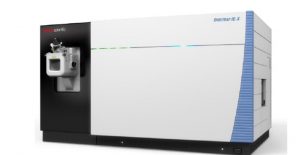
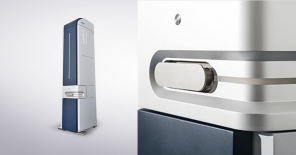
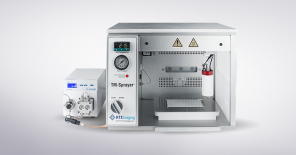

Maldi Imaging part of Metabolomics unit was established with the support from OP RDE project CZ.02.1.01/0.0/0.0/16_013/0001789 – Upgrade of the Czech Centre for Phenogenomics: developing towards translation research. Metabolomics unit was upgraded under project CZ.02.1.01/0.0/0.0/18_046/0015861 CCP Infrastructure Upgrade II in the years 2020 – 2022 and currently it is being upgraded from the OP JAC project CZ.02.01.01/00/23_015/0008189 Upgrade of the large research infrastructure CCP III.