Advanced In Vitro Models (AIM)
- Laboratory technicians:
AIM intends to provide a comprehensive range of in vitro cellular systems, including human induced pluripotent stem cells (iPSCs) and iPSC-derived 2D and 3D models, as well as mouse primary cell cultures, for modelling physiological and disease processes in controlled experimental environments.
Currently the unit focuses on skin and neural cell types. As it expands, additional tissue-specific human and mouse models will be introduced to broaden its capabilities and service portfolio.
3Rs Compliance and Global Regulatory Alignment
The 3Rs principle (Replacement, Reduction, Refinement) is now actively mandated globally. U.S. legislation (2022 amendments to the Food, Drug, and Cosmetic Act) and EU initiatives have removed mandatory animal testing requirements and explicitly promoted human-relevant alternatives. The FDA and EMA now accept non-animal approaches as supportive or primary evidence in drug development.
CCP recognises that animal models remain essential for revealing gene function in the complexity of the whole organism. AIM is introduced as a highly complementary technology, using human cells alongside, not instead of, existing animal model platforms.
Human Relevance: Rare Diseases & Neurodevelopmental Disorders
Patient-derived iPSCs and organoids offer transformative advantages:
- Isogenic controls: CRISPR/Cas9-edited iPSCs allow mutation-specific pathogenic effects in an otherwise genetically identical background.
- Patient-specific phenotypes: organoids from patients with rare variants reveal human-specific pathophysiology not fully recapitulated in animals.
- Mechanistic depth: cell-to-cell interactions and tissue architecture enable investigation at relevant biological complexity.
AIM directly supports the CCP RD-Factory programme, providing human-relevant evidence before or alongside animal studies for rare disease discovery and preclinical validation.
Integrated pipeline: Human organoids / iPSCs (AIM) → Rodent genetic models (TAM / Phenotyping) → Phenotyping → Clinical translation. Each stage de-risks the next, reducing total animal use while improving human predictiveness.
Future Directions (2027–2034)
- Brain organoid protocols for Angelman syndrome, Prader–Willi syndrome, and other neurodevelopmental / neurodegenerative conditions (RD-Factory alignment).
- Skin organoid systems for rare dermatological disease research.
- Expanded open-access service portfolio for external academic and industrial users.
Standard Services Human iPSCs and Derived Cultures
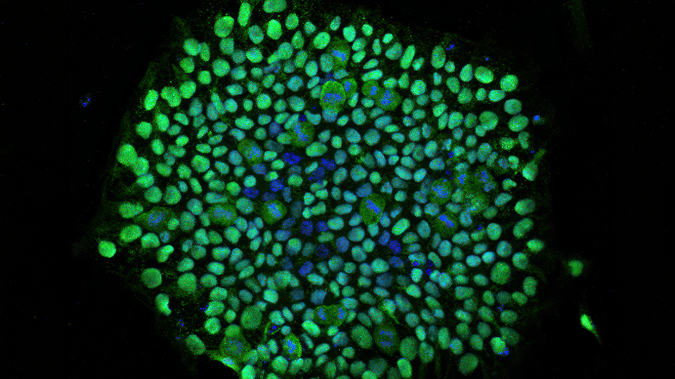
AIM generates, characterises, and maintains human iPSC lines and differentiates them into 2D and 3D neural and skin models. Source material includes fibroblasts and peripheral blood (whole blood / PBMCs). Reprogramming uses nucleofection or lipofection of non-integrating episomal vectors.
iPSC Reprogramming & Maintenance
- Reprogramming of human somatic cells: fibroblasts and PBMCs using non-integrating episomal vectors.
- Long-term iPSC culture: feeder-free maintenance and expansion under standardised protocols.
- Quality control: pluripotency assessment, trilineage differentiation potential, mycoplasma testing, karyotyping, cryopreservation.
- hPSCreg registration: iPSC lines registered in the international repository for transparency and reproducibility.
Differentiation into Neurons and Glial Cells
- Neural progenitor cells (NPCs): directed differentiation; downstream generation of neurons and astrocytes.
- Microglia: stepwise differentiation via hematopoietic and microglial progenitor stages.
Organoid Generation
- Brain organoids: guided and unguided (cerebral) protocols for neurodevelopmental and neurodegenerative disease modelling.
- Skin organoids: guided differentiation for dermatological disease research and therapeutic screening.
- Retinal organoids (in development): targeted at retinal dystrophies and age-related macular degeneration.
Experimental Support
- Preparation of models for functional assays, small-molecule testing, and gene-editing experiments.
- Transfection and targeted genetic modification.
Standard Services Mouse Primary Cell Cultures
Primary neural and tissue-specific cell cultures can be prepared from wild-type and genetically modified mice, enabling controlled comparisons within the same genetic and environmental background.
Isolation and Culture
- Cell types: cortical, hypothalamic, and hippocampal neurons; primary astrocytes; mouse embryonic fibroblasts.
- Protocols: short- and long-term maintenance, cryopreservation, and cell immortalisation.
Cohort Preparation
- Cultures from a single litter; pooling by sex or genotype from heterozygous embryos or pups.
- Assistance with experimental design and protocol optimisation.
Custom Services Tailored experimental workflows
In addition to standardised offerings, the unit provides tailored experimental workflows developed in close consultation with each research team:
- Patient-specific iPSC model development: derivation and characterisation from patient material for rare disease research.
- Specialised differentiation protocols: adaptation to generate specialised or novel cell types on request.
- Functional assay and organoid model design: collaborative design of disease-relevant assays or 3D organoid systems.
In development:
- Genetic manipulation strategies: optimisation of CRISPR/Cas9, transfection, and other genetic modification workflows.
- Drug / gene therapy screening: high-throughput compound and therapeutic candidate evaluation in human organoids.
- Rare disease modelling (RD-Factory): patient-derived iPSCs and organoids supporting CCP’s rare disease pipeline.
- Training and capacity building: workshops and collaborative projects disseminating iPSC / organoid technologies.
Custom services are developed in close consultation with research teams. Academic and industry partners are both welcome. Please contact us to discuss your project and requirements.
Access & Request Services Access & How to Request Services
Who Can Use AIM?
AIM welcomes collaboration with internal and external research groups. Services are available to academic and industry partners and can be adapted to specific experimental designs and timelines.
How to Access
- Review services: browse standard and custom service descriptions on this page.
- Submit a request: complete the online form (link below) with a project description and required services.
- Consultation: an AIM team member will contact you to discuss requirements, timeline, and pricing.
- Execution: services are carried out under agreed protocols; results delivered with full documentation.
Do you have questions? Ask us