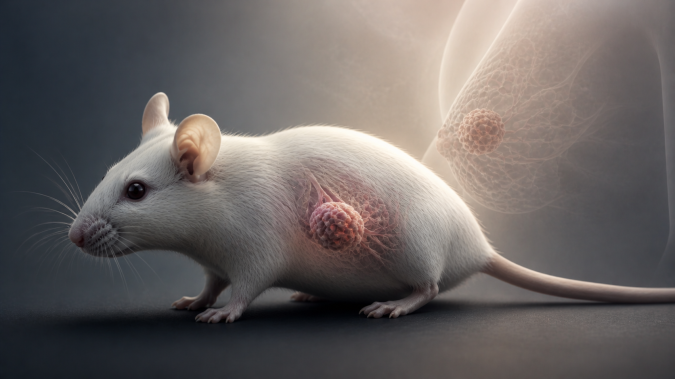
PDX & Cancer Models
- Research fellow:
- Laboratory technicians:
The platform supports end-to-end experimental workflows, from tumor engraftment and expansion to longitudinal monitoring, multimodal phenotyping, and preclinical efficacy studies. Tumor growth and dissemination are assessed using complementary readouts including bioimaging, histopathology, immunophenotyping, and molecular profiling. Integration with CCP core units enables parallel evaluation of treatment response, toxicity, and systemic effects, allowing stratification of tumor behavior and therapeutic sensitivity.
Representative workflows include:
- Breast cancer PDX models – orthotopic implantation into the mammary fat pad combined with longitudinal imaging, histopathology, and molecular profiling enables detailed analysis of tumor growth, metastatic spread, and response to targeted therapies.
- Leukemia models – systemic or intrafemoral engraftment enables modelling of bone marrow involvement and disease dissemination, with integrated immunophenotyping and longitudinal assessment of therapeutic response.
- Immuno-oncology platforms – humanized models combined with tumor engraftment enable evaluation of tumor–immune interactions and response to immunotherapies, including checkpoint inhibitors and combination strategies.
Standard services Cancer model establishment (PDX, CDX, induced models)
We provide establishment of in vivo tumor models across three major platforms:
- Patient-derived xenografts (PDX) – preserving tumor heterogeneity and clinical relevance
- Cell line-derived xenografts (CDX) – controlled and reproducible systems
- Spontaneous and induced tumor models (genetic and chemical)
Tumors are implanted using validated orthotopic and ectopic strategies (e.g. mammary fat pad, intraductal, caecal, ovarian fat pad, subcapsular, intrafemoral), enabling modelling of tissue-specific tumor biology and metastatic behavior. Models are generated in well-characterized strains (NSG, NSG-SGM3 and others) ensuring robust engraftment and experimental reproducibility.
Standard services Tumor progression and disease phenotyping
We provide standardized longitudinal monitoring of tumour development, including:
- tumor growth kinetics (calliper, imaging-based);
- dissemination and metastasis tracking;
- systemic disease manifestations.
Sampling workflows include blood, tissues, and other biological matrices, enabling downstream molecular, histological, and metabolic analyses.
Dedicated workflows support:
- early tumor development;
- advanced disease stages;
- metastasis and systemic involvement.
Standard services Preclinical efficacy studies in oncology models
We perform structured preclinical studies to evaluate therapeutic interventions, including:
- small molecules, biologics, and combination therapies;
- multiple routes of administration;
- longitudinal response monitoring;
- toxicity and tolerability assessment.
These studies are designed to generate robust, translatable datasets supporting drug development and decision-making.
Do you have questions? Ask us
Project Specific Assays PDX biobanking and model expansion
We operate a curated biobank of tumor samples and PDX lines with:
- anonymized clinical metadata;
- histopathological validation;
- quality-controlled expansion pipelines.
Access to models and expansion services is available for collaborative and contract research.
Project Specific Assays Onco-immunology and humanized platforms
We provide humanized mouse models enabling translational immuno-oncology studies:
- CD34⁺ humanized models (long-term immune reconstitution);
- PBMC-based models (short-term immune response, GvHD).
These systems enable direct interrogation of tumor–immune interactions and immunotherapy response.
Project Specific Assays Integrated multimodal tumor analysis
Custom experimental designs include:
- metastasis-focused models;
- orthotopic vs systemic disease comparisons;
- tumor microenvironment modulation;
- longitudinal and adaptive treatment designs.
Project Specific Assays Advanced tumor modelling strategies
Tumor models can be directly coupled to CCP analytical infrastructure, including:
- histopathology and immunohistochemistry;
- immunophenotyping;
- metabolomics and MALDI imaging;
- in vivo imaging (bioluminescence, ultrasound, microCT);
- clinical biochemistry.
This enables simultaneous multi-layer characterization of tumor biology.
Project Specific Assays Project design and translational optimization
We support study planning with emphasis on:
- maximizing predictive value;
- reducing failure rates in downstream clinical studies;
- optimizing experimental design and statistical power;
Do you have questions? Ask us
Technology platforms

PDX Unit was built with the support from OP RDE project CZ.02.1.01/0.0/0.0/16_013/0001789 – Upgrade of the Czech Centre for Phenogenomics: developing towards translation research and expanded under project CZ.02.1.01/0.0/0.0/18_046/0015861 CCP Infrastructure Upgrade II.